Key Takeaways:
When you observe the growth of mold around vents, or when there is a difference in the indoor air quality of your residence, air duct mold may be a problem. This guide explains:
- Warning signs to look for
- What can cause mold growth?
- Can duct cleaning help?
- When professional help may be needed
It's common that you have mold in air ducts. But the most important question is how you identity it, because having a musty smell does not mean it's definitely going to be mold. Unless you get an inspection done, you don’t know the root cause behind the smell, indoor air quality issues, and even strange growth near the ducts.
It is true that it is highly likely that an HVAC system, because of leakage or dampness, can attract mold and other microbes that can spread through the air. So, if that’s your concern, read this guide to find the real warning signs and when to finally get in touch with an expert company to handle this issue and avoid further spread.
What Causes Mold In Air Ducts?
Mold requires moisture, food, and good conditions to develop. Air ducts do not necessarily tend to be susceptible to the development of mold, yet moisture within an HVAC system may provide an atmosphere where mold can develop.
Some potential contributing factors include:
- Unnecessary moisture or condensation
- Water leak in duct
- High indoor humidity
- Poorly insulated ducts
- Leaking or overflowing condensate drain
- Moisture around the air handler
- Previous water damage
When moisture gets into or is trapped within some portion of the HVAC system, it may not be sufficient to get the visible mold off and find out the underlying problem. This is when you need the help of a professional inspection for mold in air ducts.
Warning Signs Of Mold In Air Ducts
Mold in the interior of ductwork is not necessarily easy to notice. Homeowners usually become aware of the change in smell or indoor air quality in most instances.
• A Musty Smell From Vents
Among the most evident red flags is a musty or earthy odor that lingers even when the HVAC system is on.
• Visible Growth Around Vents
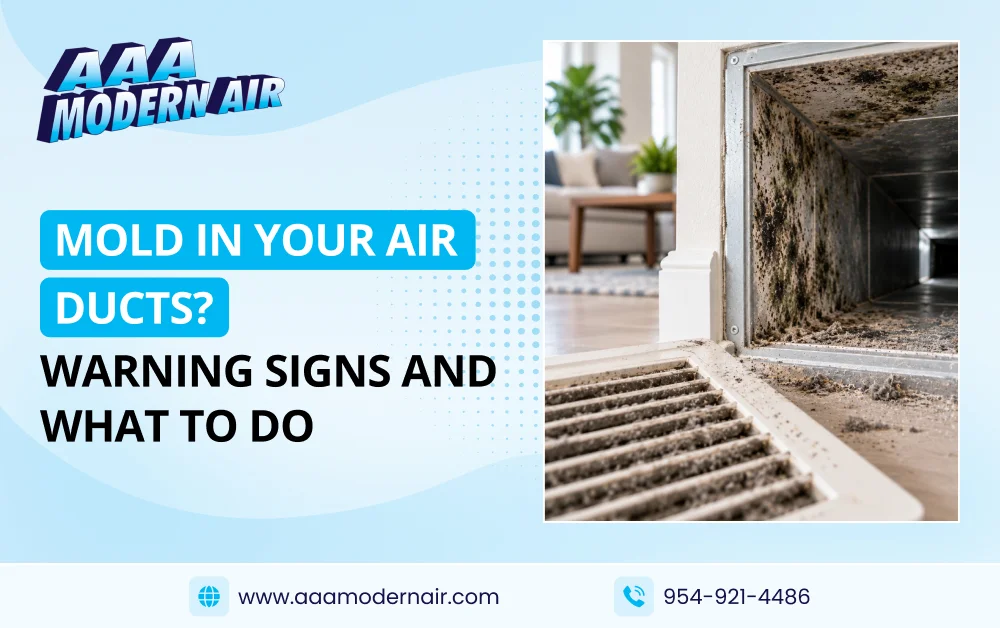
Brown, dark, greenish, or fuzzy material surrounding an air vent can cause concern about getting mold.
One should not think that all dark spots are because of black mold HVAC growth. Dust, dirt, soot, and other materials may appear alike.
• Unexplained Indoor Air Quality Changes
If you feel a strong odor with a musty and damp smell, it's definitely a problem that is affecting the indoor air quality. It is likely because of mold, but the real root cause can be identified better when you get your ducts checked by an expert.
• Recurring Moisture Problems
Recurring condensed water, water leaks, or dampness around your HVAC system may lead to an increase in the chances of microbial growth.
If you observe dampness in the air handler, ductwork, or any other HVAC component, it is worthwhile to deal with the damp issue despite the fact that you have not observed any apparent mold.
Does Duct Cleaning Help Allergies?
A question that many homeowners pose is: Does duct cleaning help allergies? It depends on what is causing the problem with indoor air quality. If there is dust and pollen, then yes, you can actually feel a difference after cleaning your ducts. But if there is mold, you should never touch or scrub that area to avoid releasing it into the air and further into the ducts. This only increases the potential for spreading, and that’s why we highly recommend speaking to a professional who can solve this issue right from its root.
What Should You Do If You Suspect Mold?
To begin with, when you think your air ducts have mold, start by seeking any visible signs of moisture and visible growth around the areas that can be reached easily.
The timing of the odor is also something that you need to observe. Is the musty smell noticeable only upon the start of the AC? Is it near one of the vents? Is there a problem with a leak or condensation recently?
This information can guide an HVAC expert in determining what could be occurring.
Do not unnecessarily disturb possible mold. By scrubbing or brushing a possibly contaminated surface, there is a risk of releasing particles into the air.
How Can You Prevent Mold in Air Ducts?
Some helpful steps include:
- Maintain indoor humidity
- Periodically change air filters
- Fix water leaks in HVAC
- Keep drains of condensate clean
- Keep ducts well insulated
- Schedule appropriate HVAC maintenance
- Get an expert for inspection
Does UV Air Sanitizer Help With Mold?
A UV air sanitizer is an HVAC device that is an air treatment system that employs ultraviolet light. UV technology can be applied to assist in the control of some microorganisms in HVAC equipment or in the airstream, depending upon the system used and installation.
UV technology cannot be viewed as an alternative to repairing a leakage, humidity regulation, filter upkeep, or physical treatment of a known contamination.
Conclusion:
Air ducts may have mold, and you should not assume that they do based on a dark spot or strange smell. A musty smell, evident suspected growth, recurrent dampness, and changes in indoor air quality are all reasons to look into and get in touch with an expert of HVAC systems. AAA Modern Air can help you find the root cause of the problem, especially where moisture is at stake. Get professional cleaning for mold in air ducts, HVAC maintenance, moisture control, or other solutions for better indoor air quality and usage of your system.
FAQs
How much does duct cleaning cost?
The cost of duct cleaning may be different according to the:
- Size of the home
- Design
- Ease of access to the ductwork
- Cleaning needed
- State of the HVAC system
Additional evaluation or remediation might be required in case of the possible presence of mold or severe contamination. This is the reason why it is preferable to have the system reviewed prior to making a decision to select a cleaning service on the basis of price.
Should You Clean Mold Yourself?
Household mold can be managed in small spaces with consideration of proper cleaning advice, but HVAC systems and ducts are more complex.
When you suspect that you have mold in your ductwork, air handler, or other HVAC parts, it is usually safer to have a professional evaluation.
Are HVAC black molds harmful?
Some molds may also be a cause of concern in terms of indoor air quality; however, you cannot tell the type of mold just by its color. When you think your HVAC system has a serious case of mold, it is best to seek professional service rather than cleaning it.